Product Description
LFR 50/5-4 N U Groove Tungsten Carbide Wire Straightening Rollers Rolling Bearing Tube Straightening Roller Sheet Metal Straightening Rollers
Product Description
This bearing is custom-designed for bearing steel, dimensional accuracy are very good, suitable for high-precision, high-speed, high-load components.
This roller mainly used for wire cutting molybdenum wire and other wire guide wheel guide wheel assembly. Please confirm the purchase.
Different shapes of materials are suitable for the straightening wheel groove type, the linear type is suitable for V groove, the bar material is suitable for U groove, and the rectangular flat material is suitable for H groove.
We offer customed service according to your drawing.
Our Advantages
Name:Wire Straightening Rollers
Material: Bearing steel
Pakage: 5pcs with carton
ID*OD*Height:
Groove: U/V
Weight:0.3kgs
Usage:Part of wire straightener/guide roller
Product Parameters
Model description:
10x32x9 V4x1.5=10x32x9 represents inner diameter 10mm* outer diameter 32mm* height 9mm, V4x1.5 represents V groove, groove width 4mm, groove depth 1.5mm
|
Inner diameter*outer diameter*height(mm) |
Groove |
Material |
Groove Width(mm) |
Groove depth(mm) |
|
10x32x9 |
V/U |
Bearing steel |
4 |
1.5 |
|
10X35X9 |
V |
Bearing steel |
5 |
2 |
|
10x40x14 |
U |
Bearing steel |
8 |
Detailed Photos
Certifications
Related Procucts
Company Profile
ZheJiang QiPang Industrial Co., Ltd. Founded in 2008, with 13 years of experience, is a research and development, production, sales of wire straightening cutting machine, bending machine, molding machine, copper pipe cutting machine equipment as 1 of the large machinery manufacturing enterprises. We believe that quality is survival, so we only provide you the best products. High quality products, in line with international standards, well received by domestic and foreign customers. All staff in our company are professionally trained, so we can recommend the most suitable equipment for you. Every machine has to pass strict inspection before it goes out. Any questions about the machine will be answered within 24 hours. Welcome to be our new customer! ZheJiang Qi Pang Industrial Co., LTD. specializes in producing wire straightening machine and cutting machine with advanced production technology, modern production mode, complete varieties and diverse styles. We can provide you with not only the nice quality products but also the great services.
Packaging & Shipping
FAQ
Q1: Are you a factory or trading company?
We are a factory . We can promise you a short lead time and best price if you purchase our machine. We also have our own trading department.
Q2: How does the factory ensure products quality?
With Nearly 16 years experience in manufacturing winding machine, we have our own technology develop department and testing department.
Quality is the first priority. We have strict purchasing system to ensure the quality of spare parts. We have experienced workers to assemble and test machine.
Q3:How about your after-sale service?
We have a professional technology supporting team for your timely services. You can get the help you need in time by telephone, webcam, online chat (Google talk, Facebook, Skype). Please contact us once the machine has any problem. Best service will be offered.
Q4: What are your payment terms?
100%TT or prepaid 50% , balance 50% before shipping.
Q5: How can I get my order? How can I know you sent the goods?
We will send the goods by UPS, DHL, FedEx or sea shipment. After we sent the goods, we will give you the tracking number or other relative files for checking.
Q6 : Will you send the installed machine or machine parts?
We will install the machine and test the machine before delivery. And the machine can be used directly after receiving the
machine.
Q7: Will you provide operation guidance for us?
We will send the instruction book with the machine and send you a video about how to operate the machine.
Q8 : How long is the warranty period?
12 months warranty, we will send you free spare parts by air within 1 week if there are any quality problems
/* March 10, 2571 17:59:20 */!function(){function s(e,r){var a,o={};try{e&&e.split(“,”).forEach(function(e,t){e&&(a=e.match(/(.*?):(.*)$/))&&1
| After-sales Service: | 1year |
|---|---|
| Type: | CNC |
| Usage: | Wire, Straightening and Cutting |
| Customization: |
Available
|
|
|---|
.shipping-cost-tm .tm-status-off{background: none;padding:0;color: #1470cc}
|
Shipping Cost:
Estimated freight per unit. |
about shipping cost and estimated delivery time. |
|---|
| Payment Method: |
|
|---|---|
|
Initial Payment Full Payment |
| Currency: | US$ |
|---|
| Return&refunds: | You can apply for a refund up to 30 days after receipt of the products. |
|---|
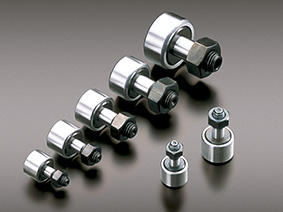
How do cam rollers contribute to the adaptability and versatility of tracking systems in various settings?
Cam rollers play a significant role in enhancing the adaptability and versatility of tracking systems across various settings. Their design and functionality enable them to meet the diverse requirements of different applications. Here’s a detailed explanation of how cam rollers contribute to the adaptability and versatility of tracking systems:
- Multiple Track Configurations: Cam rollers can be utilized in various track configurations, such as linear tracks, curved tracks, or complex multi-axis tracks. This flexibility allows tracking systems to adapt to different motion patterns and trajectories required by different applications. Whether it’s a straight-line motion, circular path, or customized multi-axis motion, cam rollers can be configured to accommodate a wide range of tracking requirements.
- Adjustable Cam Profiles: The design of cam rollers allows for adjustable cam profiles. Cam profiles determine the motion characteristics of the tracking system, including acceleration, deceleration, and dwell periods. By modifying the cam profiles, cam rollers can be customized to suit specific application needs. This adjustability enhances the adaptability of tracking systems, enabling them to handle different speed profiles, motion sequences, or tracking patterns.
- Modular and Scalable Design: Cam rollers are often designed with a modular and scalable approach, allowing for easy integration into different systems and the ability to scale up or down based on application requirements. They can be combined with other components, such as motors, gearboxes, or sensors, to create a complete tracking system. This modular design facilitates the adaptability and versatility of tracking systems, enabling customization and quick reconfiguration as per changing needs.
- Wide Range of Load Capacity: Cam rollers are available in various sizes and configurations, offering a wide range of load capacities. From lightweight applications to heavy-duty industrial settings, cam rollers can handle different loads and forces. This versatility allows tracking systems to adapt to diverse payload requirements, making them suitable for applications ranging from small-scale automation to large-scale material handling.
- Compatibility with Different Environments: Cam rollers are designed to operate in various environmental conditions. They can withstand factors like temperature variations, dust, moisture, and contaminants commonly found in industrial or outdoor settings. This compatibility with different environments enhances the adaptability of tracking systems, enabling their deployment in diverse industries such as manufacturing, logistics, automotive, and aerospace.
- Integration with Control Systems: Cam rollers can be seamlessly integrated with electronic or computer-controlled components, such as sensors, actuators, or programmable logic controllers (PLCs). This integration allows for precise control, synchronization, and automation of tracking systems. By incorporating control systems, cam rollers can adapt to dynamic operating conditions, respond to real-time feedback, and enable advanced tracking functionalities.
- Compatibility with Various Object Shapes and Sizes: Cam rollers are designed to accommodate a wide range of object shapes, sizes, and materials. They can track objects of different geometries, from flat panels to irregularly shaped components. This compatibility with various object characteristics enhances the versatility of tracking systems, enabling them to handle diverse workpieces, products, or materials.
The adaptability and versatility of tracking systems are significantly enhanced by the use of cam rollers. Their ability to work with different track configurations, adjust cam profiles, modular design, load capacity, environmental compatibility, integration with control systems, and compatibility with various object shapes and sizes makes them a valuable component in a wide range of applications, providing adaptability, flexibility, and versatility to tracking systems in diverse settings.
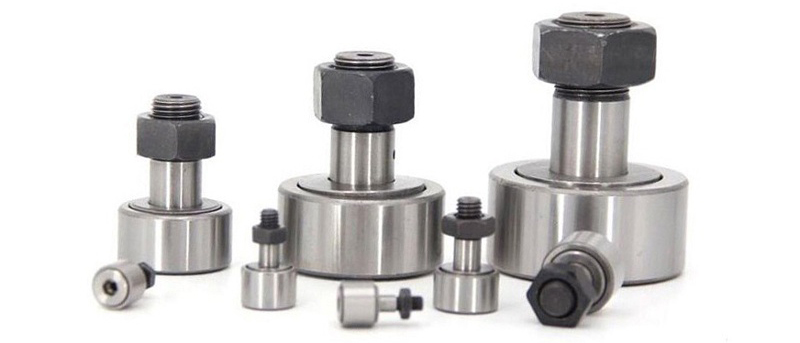
Can you explain the impact of cam rollers on the overall efficiency of tracking systems?
Cam rollers play a crucial role in the overall efficiency of tracking systems. These systems rely on the precise and controlled movement of components or objects along a predetermined path, and cam rollers contribute to achieving accurate tracking, smooth motion, and reliable operation. Here’s a detailed explanation of the impact of cam rollers on the overall efficiency of tracking systems:
- Precision Tracking: Cam rollers are designed to follow a specific cam profile or track, which allows for precise tracking of objects or components. The shape and contour of the cam determine the desired motion, and the cam rollers ensure that the objects or components move along the track with high accuracy and repeatability. This precise tracking capability enhances the overall efficiency of tracking systems by ensuring that the intended path is followed consistently.
- Smooth Motion: Cam rollers are engineered to provide smooth rolling motion along the cam profile or track. The rolling elements of the cam rollers, such as bearings or rollers, minimize friction and enable the objects or components to glide smoothly along the track. This smooth motion reduces energy consumption, minimizes wear and tear, and enhances the overall efficiency of the tracking system by facilitating seamless movement without jerks or disruptions.
- Reduced Wear: By distributing the load evenly and providing a rolling contact, cam rollers help reduce wear on both the rollers themselves and the track they follow. The rolling action minimizes frictional forces and wear compared to sliding or dragging mechanisms. This reduced wear extends the lifespan of the cam rollers and the tracking system components, ensuring long-term efficiency and reliability.
- High-Speed Capability: Cam rollers are designed to operate at high speeds without compromising performance. The choice of materials, lubrication, and design factors such as stability and balance enable cam rollers to handle rapid motion and high-speed tracking requirements. Their ability to maintain accurate tracking and smooth motion even at high speeds enhances the overall efficiency of tracking systems in applications where speed is crucial.
- Load Capacity: Cam rollers are engineered to handle varying load capacities based on their design and construction. They can support significant loads while maintaining precise tracking and smooth motion. This load-carrying capability ensures that tracking systems can accommodate different objects or components of varying weights, contributing to the overall efficiency of the system by enabling versatile and reliable operation.
- Reliability and Durability: Cam rollers are typically designed for robustness and durability. They are built to withstand the demands of continuous operation, heavy loads, and challenging environmental conditions. The use of high-quality materials, proper lubrication, and appropriate maintenance practices ensure the reliability and longevity of cam rollers, minimizing downtime and maximizing the overall efficiency of tracking systems.
In summary, cam rollers have a significant impact on the overall efficiency of tracking systems. Their precision tracking, smooth motion, reduced wear, high-speed capability, load capacity, reliability, and durability contribute to the efficient and reliable operation of tracking systems in various applications. By incorporating well-designed and properly maintained cam rollers, tracking systems can achieve optimal performance, accuracy, and productivity.
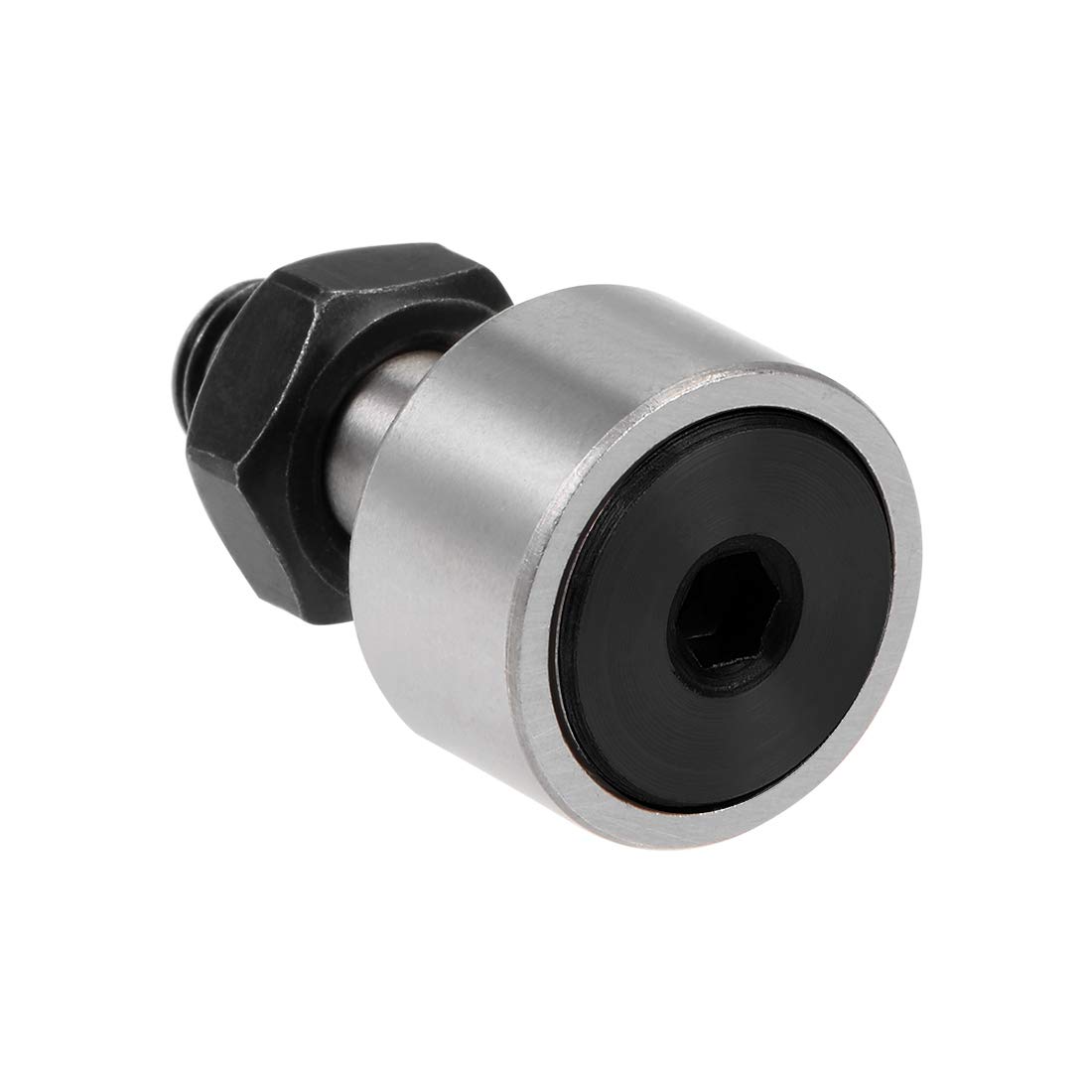
What are the different types and configurations of cam rollers available in the market?
Cam rollers, also known as cam followers or track rollers, are available in various types and configurations to suit different applications and requirements. The selection of the appropriate type and configuration depends on factors such as load capacity, speed, operating conditions, and specific application needs. Here’s a detailed explanation of the different types and configurations of cam rollers available in the market:
- Stud-Type Cam Rollers: Stud-type cam rollers have a stud or bolt that extends from the roller’s outer ring. The stud allows for secure attachment to the moving part of the mechanical system. Stud-type cam rollers are commonly used in applications that require high radial loads and moderate thrust loads, such as camshaft followers in engines or support rollers in conveyor systems.
- Yoke-Type Cam Rollers: Yoke-type cam rollers have a yoke or mounting flange that provides a broader surface area for attachment. The yoke is typically bolted or clamped to the moving component. Yoke-type cam rollers are suitable for applications with higher radial and axial loads, such as in heavy machinery or industrial automation systems.
- Full Complement Cam Followers: Full complement cam followers have a design that incorporates a maximum number of rolling elements, providing high load-carrying capacity. These cam rollers do not have a cage or roller retainer, allowing for more rollers to be included. Full complement cam followers are commonly used in applications where maximum load capacity is required, but speed and precision may be lower priority.
- Caged Cam Followers: Caged cam followers have a cage or roller retainer that separates and guides the rolling elements. The cage maintains proper spacing and alignment of the rollers. Caged cam followers offer advantages such as reduced friction, improved speed capability, and better roller control. They are suitable for applications that require higher speeds, precision, and controlled roller movement.
- Hexagonal Bore Cam Followers: Hexagonal bore cam followers have a hexagonal-shaped inner bore instead of a cylindrical bore. This design allows for direct tightening using a hexagonal wrench, simplifying installation and adjustment. Hexagonal bore cam followers are commonly used in applications where frequent adjustment or repositioning is required, such as in printing machinery or packaging equipment.
- Stud-Type with Eccentric Collar: This type of cam roller features a stud with an eccentric collar. The eccentric collar allows for easy adjustment of the roller’s position by rotating the collar, providing a simple means of adjusting the preload or clearance in the system. Stud-type cam rollers with eccentric collars are commonly used in applications that require precise adjustment, such as in tensioning systems or in machinery with adjustable clearances.
These are some of the commonly available types and configurations of cam rollers in the market. Each type offers specific advantages and is designed to meet the demands of different applications. It is important to consider factors such as load capacity, speed requirements, precision, and specific application needs when selecting the appropriate type and configuration of cam roller.
In summary, the market offers a variety of cam roller types and configurations, including stud-type, yoke-type, full complement, caged, hexagonal bore, and stud-type with eccentric collar. Each type has its own advantages and is suitable for specific applications based on load capacity, speed, precision, and adjustability requirements.


editor by CX 2024-01-11