Product Description
Welcome to choose KORTON INDUSTRIAL LIMITED.
NO 1. Our advantages:
1. 14 years bearing products manufacturing and exporting experiences.
2. OEM order and non-standard bearing order can be accepted.
3. Many sizes of bearing are available. Large quantity bearing can be provided.
4. To respect customers, you can choose the loading port.
5. A certain number of free sample can be provide to support our customer’s after-sale services and warranty.
NO 2. Description: Linear bearing
Metal linear bearing is a low-cost production of linear motion system for unlimited travel with the cylinder axis. Since the ball bearing point contact with the shaft, so use the load is small. Minimal friction ball rotation, thereby to obtain smooth movement precision. Plastic linear bearings are self-lubricating properties of a linear motion system, the biggest difference is that the metal in the metal linear bearings linear bearings are rolling friction, is the point contact between the bearing and the cylinder axis, so this suited for low load speed movement; while plastic linear bearings are sliding friction is between the bearing surface contact with the cylinder axis, so this low-speed movement for high loads.
Linear bearings are used in conjunction with hardened linear drive shaft. For infinite linear motion systems. Load the ball and quenching transmission shaft because it is the point contact, allowing the load is small, but linear motion, friction smallest, high precision, fast movement.
The linear ball bearing (also called ball bushing or shaft guiding) consists of a polymeric cage with raceway segments made of hardened steel to CZPT the ball sets within the complete system. Recirculating balls provide unlimited stroke at low friction movement.
1.Smooth movement,low friction,high rigidity and long life.
2.We can make non-standard linear bearing according to clients samples or drawings.
3.Prompt delivery and OEM service.
4.Nice appearance,complete product system.
LM – UU series
LM – UU OP series
LM – LUU series
LME – UU series
LMF – UU series
LMK – UU series
LMH – UU series
LMF – LUU series
LMK – UU series
LMH – LUU series
SCS – UU series
SCS – LUU series
SBR – UU series
TBR – UU series
SK (SHA) series
NO 3. OEM all brand bearing
1. deep groove ball bearing 6000,6200,6300,6400,61800,61900,Z,RS,ZZ,2RS
2. spherical roller bearing 22200,22300,23000,24000,23100,24100,CA,CC,E,W33
3. cylindrical roller bearing N,NU,NJ,NN,NUP,E,ECP,ECM,ECJ
4. taper roller bearing 35710,30300,32200,32300,31300,32000
5. Aligning ball bearing 1200,1300,2200,2300,
6. needle roller bearing NA,NAV,NK,NKI,RNA,NK,RNAV,ZKLF,ZKLN,ZARF,ZARN
7. thrust ball bearing 51100,51200,51300,51400,E,M
8. angular contact ball bearing7000,7100,7200,7300,AC,BECBM,C
9. spherical plain bearing GE,GEG,GEEW,U,UC,UG,GX,GAC,SA,SABP
10.Wheel hub bearing /ceramic bearing/plastic bearing/lazy susan bearing
NO 4. Linear Bearing Specification:
| Seals Types | OPEN/2RS |
| Vibration Level | Z1V1,Z2V2,Z3V3 |
| Clearance | C2,C0,C3,C4,C5 |
| Tolerance Codes | ABEC-1,ABEC-3,ABEC-5 |
| Materral | GCr15-China/AISI52100-USA/Din100Cr6-Germany |
| MOQ | 1Set at least |
| Delivery Time | 5-15 days after contract |
| Payment Terms | TT/PAPAL/WESTERN UNION |
| Package | Tube package+outer carton+pallets; Single box+outer carton+pallets; Tube packge+middle box+outer carton+pallets; According to your requirement |
NO 5. Linear Bearing Models:
| MODEL NO. | NUMBER OF BALL ROWS | MAIN DIMENSIONS | ECCEN-TIRICITY(MAX.) | BASIC LOAD RATING | WEIGHT(g) | |||||||||||||||
| INSCRIBED CIRCLE DIAMETER | OUTER DIAMETER | LENGTH | OUTER LOCKING GROOVE | W | H | H1 | θ | DYNAMIC | STATIC | |||||||||||
| dr | TOLERANCE | D | TOLERANCE | L | TOLERANCE | B | TOLERANCE | D1 | c(kgf) | Co(kgf) | ||||||||||
| LM3 | 4 | 3 | 0 | 7 | 0 | 10 | 0 | 0.01 | ||||||||||||
| LM4 | 4 | 4 | -0.008 | 8 | -0.009 | 12 | -0.12 | 9 | 13 | 3 | ||||||||||
| LM5 | 4 | 5 | 10 | 15 | 10.2 | 0 | 9.6 | 1.1 | 17 | 21 | 4 | |||||||||
| LM6 | 4 | 6 | 0 | 12 | 0 | 17 | 0 | 13.5 | -0.2 | 11.5 | 1.1 | 1 | 0.01 | 21 | 27 | 6 | 6 | |||
| LM8S | 4 | 8 | -0.009 | 15 | -0.011 | 19 | -0.2 | 11.5 | 14.3 | 1.1 | 1 | 18 | 23 | 9 | ||||||
| LM8 | 4 | 8 | 15 | 24 | 17.5 | 14.3 | 1.1 | 1 | 27 | 41 | 14 | 14 | ||||||||
| LM10 | 4 | 10 | 19 | 0 | 29 | 22 | 18 | 1.3 | 1 | 6.8 | 80° | 38 | 56 | 28 | 27 | |||||
| LM12 | 4 | 12 | 21 | -0.013 | 30 | 23 | 20 | 1.3 | 1.5 | 8 | 80° | 42 | 61 | 32 | 31 | 24 | ||||
| LM13 | 4 | 13 | 23 | 32 | 23 | 22 | 1.3 | 1.5 | 9 | 80° | 52 | 79 | 38 | 39 | 32 | |||||
| LM16 | 5 | 16 | 28 | 37 | 26.5 | 27 | 1.6 | 1.5 | 11 | 80° | 79 | 120 | 74 | 73 | 58 | |||||
| LM20 | 5 | 20 | 0 | 32 | 0 | 42 | 30.5 | 30.5 | 1.6 | 1.5 | 11 | 60° | 0.02 | 88 | 140 | 80 | 80 | 72 | ||
| LM25 | 6 | 25 | -0.01 | 40 | -0.016 | 59 | 0 | 41 | 0 | 38 | 1.9 | 2 | 12 | 50° | 100 | 160 | 206 | 205 | 177 | |
| LM30 | 6 | 30 | 45 | 64 | -0.3 | 44.5 | -0.3 | 43 | 1.9 | 2.5 | 15 | 50° | 160 | 280 | 240 | 230 | 196 | |||
| LM35 | 6 | 35 | 0 | 52 | 0 | 70 | 49.5 | 49 | 2.1 | 2.5 | 17 | 50° | 0.02 | 170 | 320 | 370 | 366 | 320 | ||
| LM40 | 6 | 40 | -0.012 | 60 | -0.019 | 80 | 60.5 | 57 | 2.1 | 3 | 20 | 50° | 220 | 410 | 589 | 549 | 464 | |||
| LM50 | 6 | 50 | 80 | 100 | 74 | 76.5 | 2.6 | 3 | 25 | 50° | 390 | 810 | 1480 | 1440 | 1180 | |||||
| LM60 | 6 | 60 | 0 | 90 | 0 | 110 | 85 | 86.5 | 3.2 | 3 | 30 | 50° | 0.03 | 480 | ||||||
| SCS..UU/SCS..LUU | Slide bush | Basic load rating | |||||||||||||||||
| Type Designation |
Dimension (mm) | Type | dynamic CN |
static CoN |
Weight (kg/m) |
||||||||||||||
| T | h | E | W | L | F | G | B | C | K | S1 | S2 | L1 | |||||||
| SCS 6 UU | 6 | 9 | 15 | 30 | 25 | 18 | 15 | 20 | 15 | 5 | M4 | 3.4 | 8 | LM 6UU | 206 | 265 | 34 | ||
| SCS 8 UU | 6 | 11 | 17 | 34 | 30 | 22 | 18 | 24 | 18 | 5 | M4 | 3.4 | 8 | LM 8UU | 274 | 392 | 52 | ||
| SCS 10 UU | 8 | 13 | 20 | 40 | 35 | 26 | 21 | 28 | 21 | 6 | M5 | 4.3 | 12 | LM10UU | 372 | 549 | 92 | ||
| SCS 12 UU | 8 | 15 | 21 | 42 | 36 | 28 | 24 | 30.5 | 26 | 5.75 | M5 | 4.3 | 12 | LM 12UU | 510 | 784 | 102 | ||
| SCS 13 UU | 8 | 15 | 22 | 44 | 39 | 30 | 24.5 | 33 | 26 | 5.5 | M5 | 4.3 | 12 | LM 13UU | 510 | 784 | 120 | ||
| SCS 16 UU | 9 | 19 | 25 | 50 | 44 | 38.5 | 32.5 | 36 | 34 | 7 | M5 | 4.3 | 12 | LM 16UU | 774 | 1180 | 200 | ||
| SCS 20 UU | 11 | 21 | 27 | 54 | 50 | 41 | 35 | 40 | 40 | 7 | M6 | 5.2 | 12 | LM 20UU | 882 | 1370 | 255 | ||
| SCS 25UU | 12 | 26 | 38 | 76 | 67 | 51.5 | 42 | 54 | 50 | 11 | M8 | 7 | 18 | LM 25UU | 980 | 1570 | 600 | ||
| SCS 30UU | 15 | 30 | 39 | 78 | 72 | 59.5 | 49 | 58 | 58 | 10 | M8 | 7 | 18 | LM 30UU | 1570 | 2740 | 735 | ||
| SCS 35UU | 18 | 34 | 45 | 90 | 80 | 68 | 54 | 70 | 60 | 10 | M8 | 7 | 18 | LM 35UU | 1670 | 3140 | 1100 | ||
| SCS 40UU | 20 | 40 | 51 | 102 | 90 | 78 | 62 | 80 | 60 | 11 | M10 | 8.7 | 25 | LM 40UU | 2160 | 4571 | 1590 | ||
| SCS 50UU | 25 | 52 | 61 | 122 | 110 | 102 | 80 | 100 | 80 | 11 | M10 | 8.7 | 25 | LM 50UU | 3820 | 7940 | 3340 | ||
| SCS 60UU | 30 | 58 | 66 | 132 | 122 | 114 | 94 | 108 | 90 | 12 | M10 | 10.7 | 25 | LM 60UU | 4700 | 10000 | 4270 | ||
| SCS 8LUU | 6 | 11 | 17 | 34 | 58 | 22 | 18 | 24 | 42 | 5 | M4 | 3.4 | 8 | LM 8LUU | 274 | 392 | 0.1 | ||
| SCS 10LUU | 8 | 13 | 20 | 40 | 68 | 26 | 21 | 28 | 456 | 6 | M5 | 4.3 | 12 | LM 10LUU | 372 | 549 | 0.18 | ||
| SCS 12LUU | 8 | 15 | 21 | 42 | 70 | 28 | 24 | 30.5 | 50 | 5.75 | M5 | 4.3 | 12 | LM 12LUU | 510 | 784 | 0.2 | ||
| SCS 13LUU | 8 | 15 | 22 | 44 | 75 | 30 | 24.5 | 33 | 50 | 5.5 | M5 | 4.3 | 12 | LM 13LUU | 510 | 784 | 0.23 | ||
| SCS 16LUU | 9 | 19 | 25 | 50 | 85 | 38.5 | 32.5 | 36 | 60 | 7 | M5 | 4.3 | 12 | LM 16LUU | 774 | 1180 | 0.39 | ||
| SCS 20LUU | 11 | 21 | 27 | 54 | 96 | 41 | 35 | 40 | 70 | 7 | M6 | 5.2 | 12 | LM 20LUU | 882 | 1370 | 0.49 | ||
| SCS 25LUU | 12 | 26 | 38 | 76 | 130 | 51.5 | 42 | 54 | 100 | 11 | M8 | 7 | 18 | LM 25LUU | 980 | 1570 | 1.165 | ||
| SCS 30LUU | 15 | 30 | 39 | 78 | 140 | 59.5 | 49 | 58 | 110 | 10 | M8 | 7 | 18 | LM 30LUU | 1570 | 2740 | 1.43 | ||
| SCS 35LUU | 18 | 34 | 45 | 90 | 155 | 68 | 54 | 70 | 120 | 10 | M8 | 7 | 18 | LM 35LUU | 1670 | 3140 | 2.13 | ||
| SCS 40LUU | 20 | 40 | 51 | 102 | 175 | 78 | 62 | 80 | 140 | 11 | M10 | 8.7 | 25 | LM 40LUU | 2160 | 4571 | 3.09 | ||
NO 6. Our Bearing Factory:
NO 7. Our Bearing Packaging Box:
Why Choose Us:
- We are an industrial and trading company.We have our own brand: SFNB .If you interested in our product,I can take you to visit our factory.
- Our factory have advanced testing equipment,before the every product leave the factory,we will be testing.We can send samples to you,you can test the quality,and if you accept the sample quality,we can promise: the follow-up orders’ quality will be the same as samples.
- About ordinary standard type of bearing ,We have rich inventory,not have MOQ,if your need a product is Non-standard size,need customize,we will according the product size to determine the MOQ.
- Our company can accept OEM,you can send sample to me,we can manufacturing products the same as sample.Meanwhile,we also can accept some well-known brands of OEM,
- If the amount of money is less,you can pay it by Paypal.Of course you can payment by TT or Western Union etc.
| Bearing Structure: | Split Plain Bearing |
|---|---|
| Type of Lubricant: | Oil-Lubricated Bearing |
| Lubricant & Load: | Hydrodynamic Bearing |
| Bushing Material: | Oil-Impregnated Bearing |
| Bearing Direction: | Radial |
| Lubricating Way: | Maintenance-Free Bearing |
| Customization: |
Available
| Customized Request |
|---|
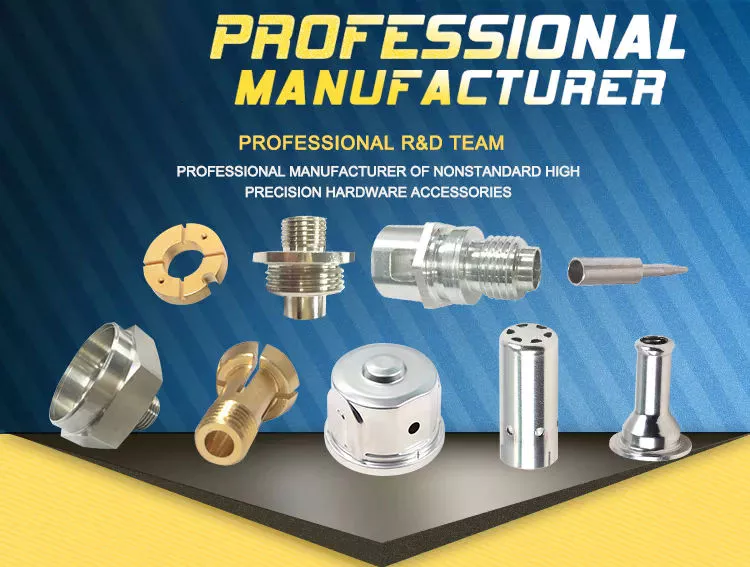
Advantages and disadvantages of different types of bushings
Bushings are a simple but essential part of machinery with sliding or rotating shaft assemblies. This type of bearing is used in a wide variety of industries because its high load-carrying capacity and excellent anti-friction properties make it a necessity for construction, mining, hydropower, transportation and agricultural machinery. In addition to these applications, bushings also play a vital role in material handling and food processing. This article explores the various types of bushings available.
air casing
The air bushing forms a frictionless cylinder that applies the load to the rotating object. Bushings are used to measure torque and provide self-centering force in applications where linear motion is critical. The following are load equations that can be used to select the appropriate air sleeve for your application. To learn more about these air sleeves, read on. This article discusses the benefits and uses of air bushings in linear motion.
Bushings have many advantages over bearings. They are not prone to wear and corrosion. Unlike bearings, they can easily bypass conversion and inspection periods. Their high-quality design guarantees reliable machine performance, yet they are inexpensive and easy to replace. In many industries, air compressors are essential for sports. The air bushing eliminates friction, allowing the compressor to work more efficiently. They can also help eliminate the need for frictionless bearings and improve the overall efficiency of the machine.
Another type of air bearing is the cylindrical bushing. These are used for linear and aerostatic motion. Their low friction properties allow them to support radial loads without wearing out or damaging components. They are usually used for normal sized shafts. Air bushings have several components that can be used with other types of air bearings. Cylindrical air bearings have four o-ring grooves that allow them to be inserted into the structure. They are often used with other types of air bearings for smoother motion.
rubber bushing
If you’re looking to buy a new suspension system, you may be wondering if rubber or polyurethane is the right choice. Rubber is less expensive, but not without its drawbacks. Polyurethane is more durable and offers better handling and suspension. Rubber bushings also reduce road feel, while polyurethane isolates the driver from the road. Both materials will help you improve handling and alignment, but each has advantages and disadvantages.
Typically, rubber bushings are cylindrical components with metal inner and outer surfaces. These metals can be stainless steel, mild steel or aluminum. They are usually stress relieved and prestressed for maximum durability. They are designed to meet the exact specifications of a specific application. For example, shock-absorbing rubber bushings are cushioning pads made of polyurethane that absorb road bumps and noise.
Unlike polyurethane, rubber suspension bushings have a shorter lifespan than polyurethane. This is because rubber is more susceptible to damage from UV rays, road chemicals and oils. The rubber also stretches and warps due to the pressure of the road. The rubber bushing also squeaks, which can be cause for concern. But if the noise persists for a long time, it may be a sign that your vehicle needs a new suspension system.
The main reason why cars use rubber bushings is for shock absorption. During machine use, vibration and noise caused by the movement of parts can cause serious damage. To prevent this, rubber bushings act as shock absorbers and damping agents. Rubber bushings are an excellent choice for automakers, but they are also used in a variety of industrial settings.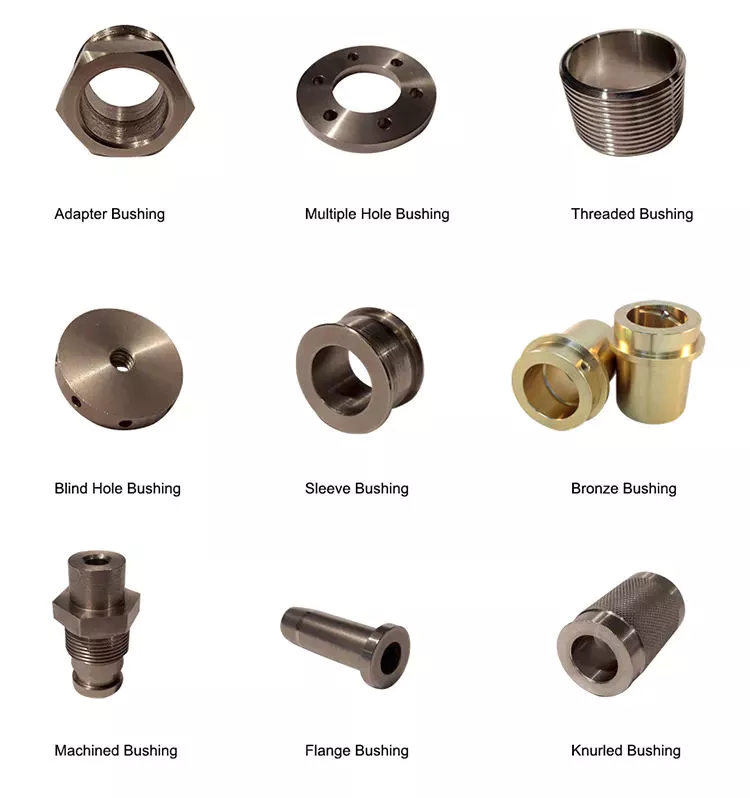
Polyurethane bushing
If you want to make your vehicle handle better, polyurethane bushings may be the answer. They come in different shapes and sizes and can improve a wide range of areas. This article will explore the advantages and disadvantages of polyurethane bushings and their potential place in your car. However, before you decide to upgrade your suspension, you should understand the various advantages and disadvantages of polyurethane bushings.
The main difference between a polyurethane bushing and a rubber bushing is how the bushing rides on the suspension arm. Polyurethane bushings do not have faces that slide against each other like rubber bushings. This means they allow for more rotation and flexion, as well as consistent alignment of the control arms. Polyurethane bushings require lubrication, but only need to be lubricated every five years, much longer than equivalent rubber bushings.
Another difference between polyurethane and rubber bushings is hardness. The former has the least elasticity and is generally the most suitable for street use. While rubber bushings provide the best NVH quality, they are also notorious for changing suspension geometry. Rubber is known to be an excellent choice for street use, but polyurethane has a lifespan that far outlasts rubber.
bronze bushing
There are two main types of bronze bushings, sintered and cast. The latter require additional lubrication and are typically used in applications where powder metal products cannot be secured. The former is cheaper than the latter, but the process is more expensive. Bronze bushings can be used in environments where the material will be exposed to high temperature and vibration. For these reasons, the production process is relatively slow and expensive.
The strength of bronze is the main reason why they are so popular. Brass is a softer metal that deforms and corrodes easily. The bronze casing can withstand continuous immersion in water and can last for hundreds of years with little or no maintenance. However, it is important to note that this metal is not resistant to aggressive chemicals and requires regular maintenance to keep it in good condition.
Bronze bushings offer many advantages, including durability and aesthetics. Bronze bushings are available in a variety of sizes and can be ordered in imperial and metric sizes. They can be built to your specifications and are very durable. You can even custom order them if you want. And because they can be customized, they are an excellent choice for high-end applications. The quality of the bronze bushings is second to none.
Plastic bushing
Engineered composite plastic bushings have been shown to last longer than bronze bushings and have also been found to reduce maintenance costs by up to 40%. Plastic bushings have become the first choice for thousands of applications, including medical equipment, food processing machinery, pumps, and more. Bronze bushings are oil-impregnated, but their performance is limited by their inherent weaknesses: oil-impregnated bronze tends to develop high levels of capillary action and requires rotational motion to maintain an intact oil film. Low speed and intermittent use of bronze bushings can also hinder the ability of the lubricant to provide adequate lubrication.
Advantages of plastic bushings over metal include low friction, non-reactive surfaces, and long life. CZPT offers a variety of engineering plastics that outperform traditional metals in a range of applications. For example, nylon bushings resist wear while requiring little lubrication. In addition, polymer-shaped plastics are lightweight and highly resistant to aggressive cleaning agents and chemicals.
Besides being less expensive than metal bushings, plastic bushings offer many other advantages. They are very durable, have a low coefficient of friction, and are more wear-resistant than metal. Unlike metal, plastic bushings do not require lubrication and do not absorb dust and oil like metal bushings. They are lightweight, easy to maintain and last longer. This makes them an excellent choice for many applications.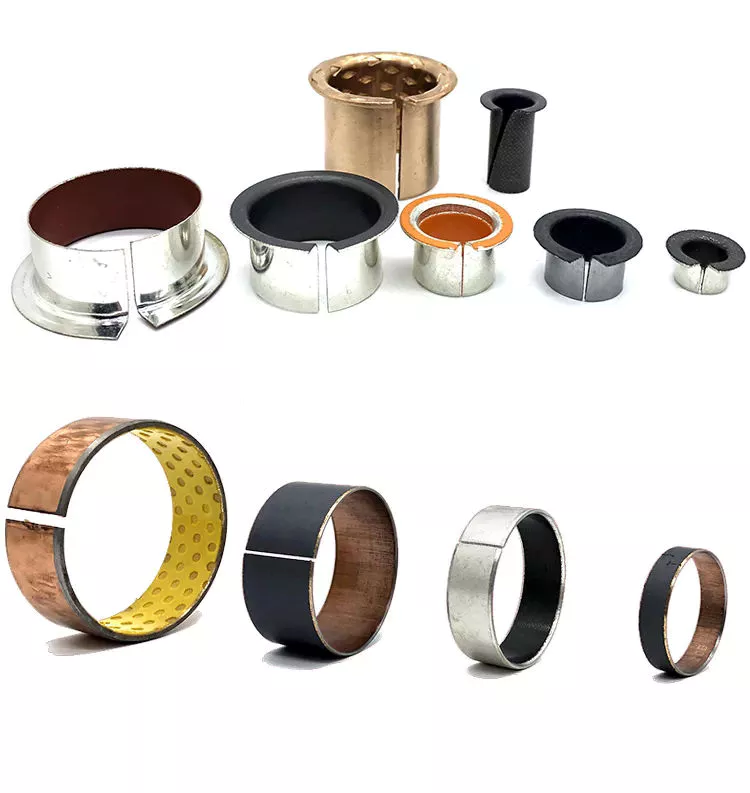
Sleeve bearing
Sleeve bearings are simple pipes with matching components. They facilitate linear motion by absorbing friction and vibration. They can withstand heavy loads and work at high temperatures for long periods of time. Flange bearings are similar to sleeve bearings, but are enclosed and rotated in a housing unit. Sleeve bearings have higher load-carrying capacity and resistance to shock loads. Furthermore, they are lightweight and low cost.
Another name for sleeve bearings is babbitt radial bearings. These bearings are usually made of bronze and have straight inner and outer diameters. They are also impregnated with oil and can withstand radial loads. Typical uses for sleeve bearings are agriculture, automotive and machine tools. Sleeves can also be solid or cored material, depending on the intended use.
The type of sleeve bearing used in the bushing is important in determining which type of bushing to buy. Sleeve bearings are sized based on pressure and speed considerations. Typically, the PV limit is an upper bound on the combined pressure and velocity for a given casing material. In some cases, the sleeve bearing used in the bushing is the same as the plain bearing.
Sleeve bearings are simple in design and made from a variety of materials, including bronze and plastic. They are more affordable than metal, but plastic is still not inaudible. Plastic sleeve bearings will rattle like metal bearings if the gap between the two bushings is not accurate. Additionally, high temperature electronic painting can permanently thin the casing. The stainless steel backing provides a good surface for electronic painting and enhances abrasion resistance.


editor by CX 2023-04-19