Product Description
Product Description
| Bearing Number | Inner diameter/mm | Outer diameter/mm | Height/mm | Weight/g | Apply Inner Ring | |||||
| NCS1012 | MR10N | SJ7133 | HJ101812 | BR101812 | 15.875(0.625) | 28.575(1.125) | 19.05(0.75) | 49 | MI6N | |
| MR10 | SJ7134 | HJ101816 | BR101816 | 15.875(0.625) | 28.575(1.125) | 25.4(1) | 54 | MI6 | ||
| NCS1212 | MR12N | SJ7153 | HJ122012 | BR122012 | 19.05(0.75) | 31.75(1.25) | 19.05(0.75) | 56 | MI8N | |
| NCS1216 | MR12 | SJ7154 | HJ122016 | BR122016 | 19.05(0.75) | 31.75(1.25) | 25.4(1) | 75 | MI8 | |
| NCS1412 | MR14N | SJ7173 | HJ142212 | BR142212 | 22.225(0.875) | 34.925(1.375) | 19.05(0.75) | 63 | MI10N | |
| NCS1416 | MR14 | SJ7174 | HJ142216 | BR142216 | 22.225(0.875) | 34.925(1.375) | 25.4(1) | 84.5 | MI10 | |
| NCS1612 | MR16N | SJ7193 | HJ162412 | BR162412 | 25.4(1) | 38.1(1.5) | 19.05(0.75) | 69 | MI12N | |
| NCS1616 | MR16 | SJ7194 | HJ162416 | BR162416 | 25.4(1) | 38.1(1.5) | 25.4(1) | 92.5 | MI12 | |
| NCS1816 | MR18N | SJ7214 | HJ182616 | BR182616 | 28.575(1.125) | 41.275(1.625) | 25.4(1) | 102 | MI14N | |
| NCS1820 | MR18 | SJ7215 | HJ182620 | BR182620 | 28.575(1.125) | 41.275(1.625) | 31.75(1.25) | 128 | MI14 | |
| NCS2016 | MR20N | SJ7234 | HJ257116 | BR257116 | 31.75(1.25) | 44.45(1.75) | 25.4(1) | 110 | MI16N | |
| NCS2571 | MR20 | SJ7235 | HJ257120 | BR257120 | 31.75(1.25) | 44.45(1.75) | 31.75(1.25) | 138 | MI16 | |
| NCS2216 | MR22N | SJ7254 | HJ223016 | BR223016 | 34.925(1.375) | 47.625(1.875) | 25.4(1) | 119 | MI18N | |
| NCS2220 | MR22 | SJ7255 | HJ223571 | BR223571 | 34.925(1.375) | 47.625(1.875) | 31.75(1.25) | 149 | MI18 | |
| NCS2416 | MR24N | SJ7274 | HJ243316 | BR243316 | 38.1(1.5) | 52.388(2.0625) | 25.4(1) | 149 | MI20N | |
| NCS2420 | MR24 | SJ7275 | HJ243320 | BR243320 | 38.1(1.5) | 52.388(2.0625) | 31.75(1.25) | 187 | MI19/MI20 | |
| NCS2616 | MR26N | SJ7294 | HJ263516 | BR263516 | 41.275(1.625) | 55.562(2.1875) | 25.4(1) | 158 | MI21N | |
| NCS2620 | MR26 | SJ7295 | HJ263520 | BR263520 | 41.275(1.625) | 55.562(2.1875) | 31.75(1.25) | 199 | MI21 | |
| NCS2816 | MR28N | SJ7314 | HJ283716 | BR283716 | 44.45(1.75) | 58.738(2.3125) | 25.4(1) | 170 | MI24N | |
| NCS2820 | MR28 | SJ7315 | HJ283720 | BR283720 | 44.45(1.75) | 58.738(2.3125) | 31.75(1.25) | 215 | MI24 | |
| NCS3571 | MR30 | SJ7335 | HJ3 0571 0 | BR3 0571 0 | 47.625(1.875) | 61.912(2.4375) | 31.75(1.25) | 225 | MI25 | |
| MR31 | SJ7345 | 49.2125(1.9375) | 63.5(2.5) | 31.75(1.25) | 246 | MI26SS | ||||
| MR32N | SJ7354 | HJ324116 | BR324116 | 50.8(2) | 65.088(2.5625) | 25.4(1) | 190 | MI26N | ||
| NCS3220 | MR32 | SJ7355 | HJ324120 | BR324120 | 50.8(2) | 65.088(2.5625) | 31.75(1.25) | 240 | MI26/MI27 | |
| NCS3624 | MR36N | SJ8406 | HJ364824 | BR364824 | 57.15(2.25) | 76.2(3) | 38.1(1.5) | 435 | MI28N | |
| MR36 | SJ8407 | HJ364828 | BR364828 | 57.15(2.25) | 76.2(3) | 44.45(1.75) | 510 | MI28/MI30 | ||
| NCS4571 | MR40N | SJ8446 | HJ405224 | BR405224 | 63.5(2.5) | 82.55(3.25) | 38.1(1.5) | 475 | MI32N | |
| MR40 | SJ8447 | HJ405228 | BR405228 | 63.5(2.5) | 82.55(3.25) | 44.45(1.75) | 555 | MI31/MI32/MI34 | ||
| NCS4424 | MR44N | SJ8476 | HJ445624 | BR445624 | 69.85(2.75) | 88.9(3.5) | 38.1(1.5) | 510 | MI36N | |
| MR44 | SJ8477 | HJ445628 | BR445628 | 69.85(2.75) | 88.9(3.5) | 44.45(1.75) | 600 | MI35/MI36 | ||
| NCS4824 | MR48N | SJ8516 | HJ486571 | BR486571 | 76.2(3) | 95.25(3.75) | 38.1(1.5) | 555 | MI40N | |
| MR48 | SJ8517 | HJ486571 | BR486571 | 76.2(3) | 95.25(3.75) | 44.45(1.75) | 650 | MI38/MI39/MI40 | ||
| NCS5228 | MR52 | SJ9567 | HJ526828 | BR526828 | 82.55(3.25) | 107.95(4.25) | 44.45(1.75) | 990 | MI44 | |
| MR56N | SJ9607 | 88.9(3.5) | 114.3(4.5) | 44.45(1.75) | 1120 | MI48N | ||||
| MR56 | SJ9608 | HJ567232 | BR567232 | 88.9(3.5) | 114.3(4.5) | 50.8(2) | 1220 | MI46/MI47/MI48 | ||
| MR60 | SJ9648 | HJ6 0571 2 | BR6 0571 2 | 95.25(3.75) | 120.65(4.75) | 50.8(2) | 1290 | MI50/MI52 | ||
| MR64 | SJ9688 | HJ648032 | BR648032 | 101.6(4) | 127(5) | 50.8(2) | 1370 | MI54/MI56 | ||
| NCS6832 | MR68 | SJ9728 | HJ688432 | BR688432 | 107.95(4.25) | 133.35(5.25) | 50.8(2) | 1580 | MI60 | |
| MR72 | SJ6769 | HJ729636 | 114.3(4.5) | 152.4(6) | 57.15(2.25) | 2540 | MI62 | |||
| MR80 | SJ6849 | HJ801571 | 127(5) | 165.1(6.5) | 57.15(2.25) | 3040 | MI68 | |||
| MR88N | SJ6918 | HJ8811240 | 139.7(5.5) | 177.8(7) | 63.5(2.5) | 4400 | MI72N | |||
| MR88 | SJ6919 | HJ8811248 | 139.7(5.5) | 177.8(7) | 76.2(3) | 4956 | MI72 | |||
| MR96N | SJ6925 | HJ9612040 | 152.4(6) | 190.5(7.5) | 63.5(2.5) | 4650 | MI80N | |||
| MR96 | SJ6926 | HJ9612048 | 152.4(6) | 190.5(7.5) | 76.2(3) | 5330 | MI80 | |||
| MR104N | SJ6935 | HJ1 0571 840 | 165.1(6.5) | 203.2(8) | 63.5(2.5) | 4970 | MI88N | |||
| MR104 | SJ6936 | HJ1 0571 848 | 165.1(6.5) | 203.2(8) | 76.2(3) | 5700 | MI88 | |||
| MR116 | SJ2326 | HJ11614648 | 184.1(7.25) | 231.775(9.125) | 76.2(3) | 8110 | MI96 | |||
| MR124 | SJ2426 | HJ12415448 | 196.85(7.75) | 244.475(9.625) | 76.2(3) | 8310 | MI104 | |||
| MR132 | SJ2526 | HJ13216248 | 209.55(8.25) | 257.175(10.125) | 76.2(3) | 9080 | MI112 | |||
| MR140 | SJ2626 | HJ14017048 | 222.25(8.75) | 269.875(10.625) | 76.2(3) | 9550 | MI120 | |||
Production Line
COMPANY PROFILE
HangZhou Siruibo Bearing Technology Co., Ltd. is a company mainly engaged in manufacturing and selling outer spherical bearings. The registered capital is Five million.
Since its establishment 20 years ago, the company is committed to Mounted Bearing Unit (maintenance-free bearings, engraving machine bearings, holding machine shaft Bearing, no-tillage machine bearing, fan bearing, high temperature bearing, zinc alloy bearing, food grade bearing unit) research and development. With the most complete varieties and best advanced manufacturing technology in production of Mounted Bearing Unit, to be a reliable enterprises, we welcome your cooperation. Currently, our company produce 10 series of more than 260 varieties of outer spherical bearings and 13 different structural categories of outer spherical bearing special seats, all adopted International standard design and manufacturing. Registered trademark “FOS” .
Through the efforts and unremitting pursuit of all employees of the company, all products accepted by international standards. Over the years of Expansion and technical transformation, we developed into a Mounted Bearing Unit with large scale of professional manufacturers, for the bearing industry in China, has made a contribution to the development of Bearing.
HangZhou Siruibo Bearing Technology Co., Ltd. has a production capacity of 1 million sets/year, with an annual output value of 30 million yuan. We produce 30 varieties monthly , with 45-60 days lead time.
The company has a perfect material and product quality inspection equipment, according to the strict scientific Quality assurance system, to prove satisfactory to our customers. Our products widely used in agricultural Industry machinery, textile machinery and light industry, chemical industry, metallurgy, printing, food, transportation, coal, packaging and other industries and the introduction of machinery .Our products have exported to Europe, America and many countries and regions in South east Asia.
Exhibitions
About us:
We are 1 manufactuer of bearing for more than 20 years.
Give us a chance, we will cooperate with our passion.
Our professional, reliable, experienced products and service can meet your request.
/* January 22, 2571 19:08:37 */!function(){function s(e,r){var a,o={};try{e&&e.split(“,”).forEach(function(e,t){e&&(a=e.match(/(.*?):(.*)$/))&&1
| After-sales Service: | 24 Hours Online Service |
|---|---|
| Warranty: | 2 Years |
| Transport Package: | Cartons Pallet Metal or as Your Request |
| Specification: | Size customization |
| Trademark: | OEM FOS |
| Origin: | Linqing, Shandong Province. |
| Samples: |
US$ 0/Piece
1 Piece(Min.Order) | |
|---|
| Customization: |
Available
|
|
|---|
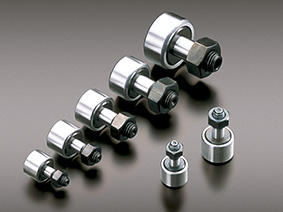
How do cam rollers contribute to the adaptability and versatility of tracking systems in various settings?
Cam rollers play a significant role in enhancing the adaptability and versatility of tracking systems across various settings. Their design and functionality enable them to meet the diverse requirements of different applications. Here’s a detailed explanation of how cam rollers contribute to the adaptability and versatility of tracking systems:
- Multiple Track Configurations: Cam rollers can be utilized in various track configurations, such as linear tracks, curved tracks, or complex multi-axis tracks. This flexibility allows tracking systems to adapt to different motion patterns and trajectories required by different applications. Whether it’s a straight-line motion, circular path, or customized multi-axis motion, cam rollers can be configured to accommodate a wide range of tracking requirements.
- Adjustable Cam Profiles: The design of cam rollers allows for adjustable cam profiles. Cam profiles determine the motion characteristics of the tracking system, including acceleration, deceleration, and dwell periods. By modifying the cam profiles, cam rollers can be customized to suit specific application needs. This adjustability enhances the adaptability of tracking systems, enabling them to handle different speed profiles, motion sequences, or tracking patterns.
- Modular and Scalable Design: Cam rollers are often designed with a modular and scalable approach, allowing for easy integration into different systems and the ability to scale up or down based on application requirements. They can be combined with other components, such as motors, gearboxes, or sensors, to create a complete tracking system. This modular design facilitates the adaptability and versatility of tracking systems, enabling customization and quick reconfiguration as per changing needs.
- Wide Range of Load Capacity: Cam rollers are available in various sizes and configurations, offering a wide range of load capacities. From lightweight applications to heavy-duty industrial settings, cam rollers can handle different loads and forces. This versatility allows tracking systems to adapt to diverse payload requirements, making them suitable for applications ranging from small-scale automation to large-scale material handling.
- Compatibility with Different Environments: Cam rollers are designed to operate in various environmental conditions. They can withstand factors like temperature variations, dust, moisture, and contaminants commonly found in industrial or outdoor settings. This compatibility with different environments enhances the adaptability of tracking systems, enabling their deployment in diverse industries such as manufacturing, logistics, automotive, and aerospace.
- Integration with Control Systems: Cam rollers can be seamlessly integrated with electronic or computer-controlled components, such as sensors, actuators, or programmable logic controllers (PLCs). This integration allows for precise control, synchronization, and automation of tracking systems. By incorporating control systems, cam rollers can adapt to dynamic operating conditions, respond to real-time feedback, and enable advanced tracking functionalities.
- Compatibility with Various Object Shapes and Sizes: Cam rollers are designed to accommodate a wide range of object shapes, sizes, and materials. They can track objects of different geometries, from flat panels to irregularly shaped components. This compatibility with various object characteristics enhances the versatility of tracking systems, enabling them to handle diverse workpieces, products, or materials.
The adaptability and versatility of tracking systems are significantly enhanced by the use of cam rollers. Their ability to work with different track configurations, adjust cam profiles, modular design, load capacity, environmental compatibility, integration with control systems, and compatibility with various object shapes and sizes makes them a valuable component in a wide range of applications, providing adaptability, flexibility, and versatility to tracking systems in diverse settings.
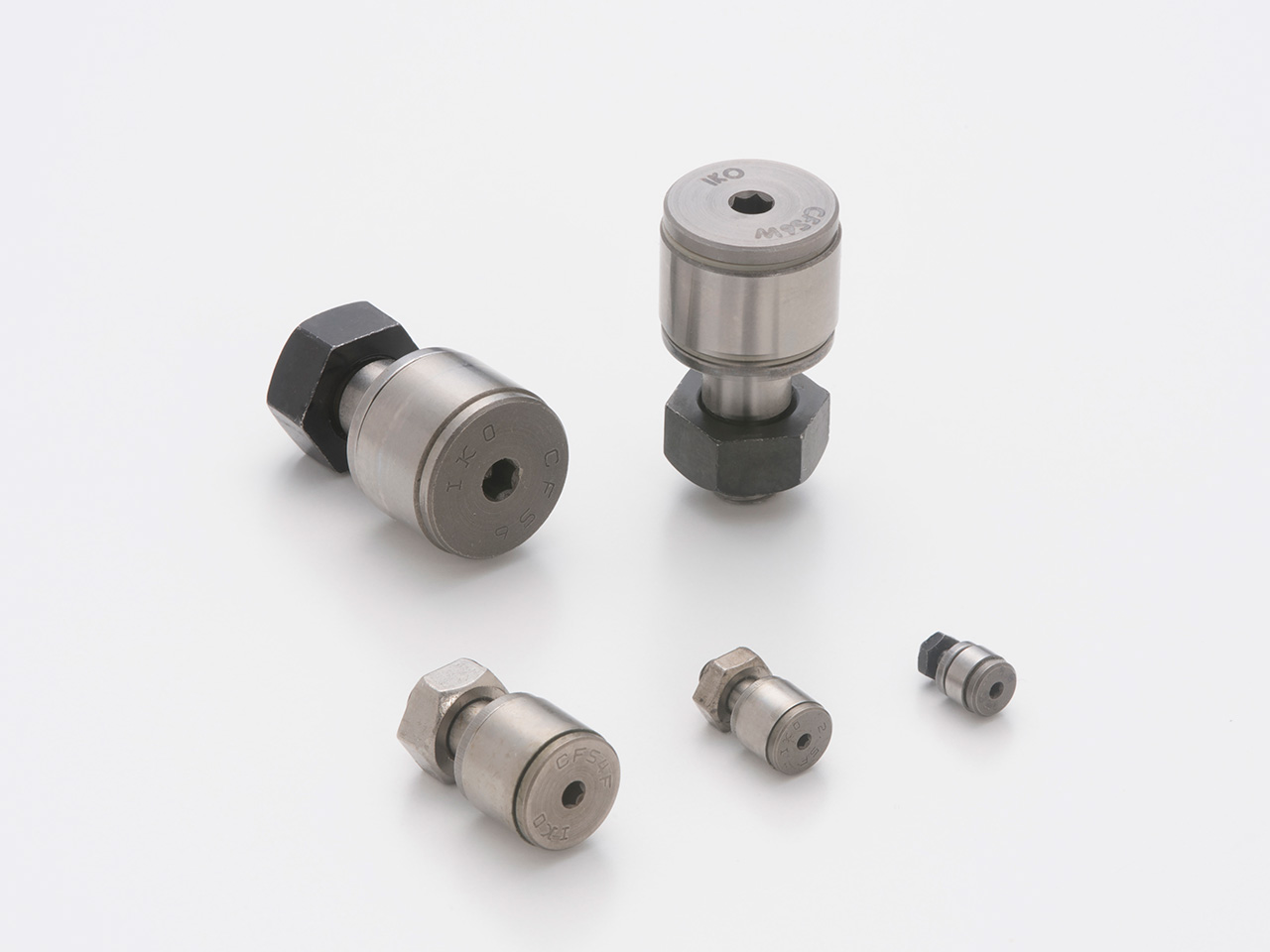
Can you provide examples of products or machinery that commonly use cam rollers?
Cam rollers are widely used in various products and machinery across different industries. Their unique design and functionalities make them suitable for applications that require precise motion, controlled tracking, and efficient operation. Here are some examples of products or machinery that commonly utilize cam rollers:
- Printing Machinery: Cam rollers are commonly found in printing machinery, such as offset printers, flexographic printers, and digital printers. They are used to precisely guide the movement of paper or printing substrates through the printing process, ensuring accurate registration and consistent print quality.
- Material Handling Systems: Cam rollers are extensively used in material handling systems, including conveyor systems, packaging equipment, and automated storage and retrieval systems (ASRS). They help in guiding and tracking the movement of items, pallets, or containers, ensuring smooth and controlled transportation within the system.
- Industrial Robots: Cam rollers play a vital role in industrial robots, particularly in robotic arms and manipulators. They facilitate precise and controlled motion, allowing the robot to perform accurate positioning, pick-and-place operations, and assembly tasks with high repeatability and reliability.
- Textile Machinery: Cam rollers are commonly utilized in textile machinery, such as weaving looms, knitting machines, and spinning machines. They assist in guiding the movement of yarns, threads, or fabrics, ensuring proper tension and alignment during the manufacturing process.
- Automotive Manufacturing: Cam rollers are employed in various stages of automotive manufacturing, including assembly lines, paint booths, and body-in-white operations. They contribute to the smooth and precise movement of car bodies, parts, or components, enabling efficient production processes.
- Packaging Machinery: Cam rollers are commonly integrated into packaging machinery, such as form-fill-seal machines, cartoners, and labeling machines. They assist in guiding the packaging materials, ensuring accurate positioning, and controlled movement during the packaging process.
- Food Processing Equipment: Cam rollers find applications in food processing equipment, including filling machines, sorting systems, and packaging lines. They aid in the smooth and precise movement of food products, containers, or packaging materials, maintaining the integrity and quality of the processed food items.
- Medical Devices: Cam rollers are utilized in medical devices and equipment, such as diagnostic machines, laboratory automation systems, and surgical robots. They contribute to the precise movement and positioning required for accurate diagnostic results, sample handling, or surgical procedures.
These examples represent just a few of the many products and machinery where cam rollers are commonly used. Their versatility, precision, and reliability make them suitable for a wide range of applications in industries like printing, material handling, robotics, textiles, automotive manufacturing, packaging, food processing, and medical devices.
In summary, cam rollers are widely employed in various products and machinery across different industries. Their usage in printing machinery, material handling systems, industrial robots, textile machinery, automotive manufacturing, packaging machinery, food processing equipment, and medical devices demonstrates their significance in achieving precise motion, controlled tracking, and efficient operation in diverse applications.
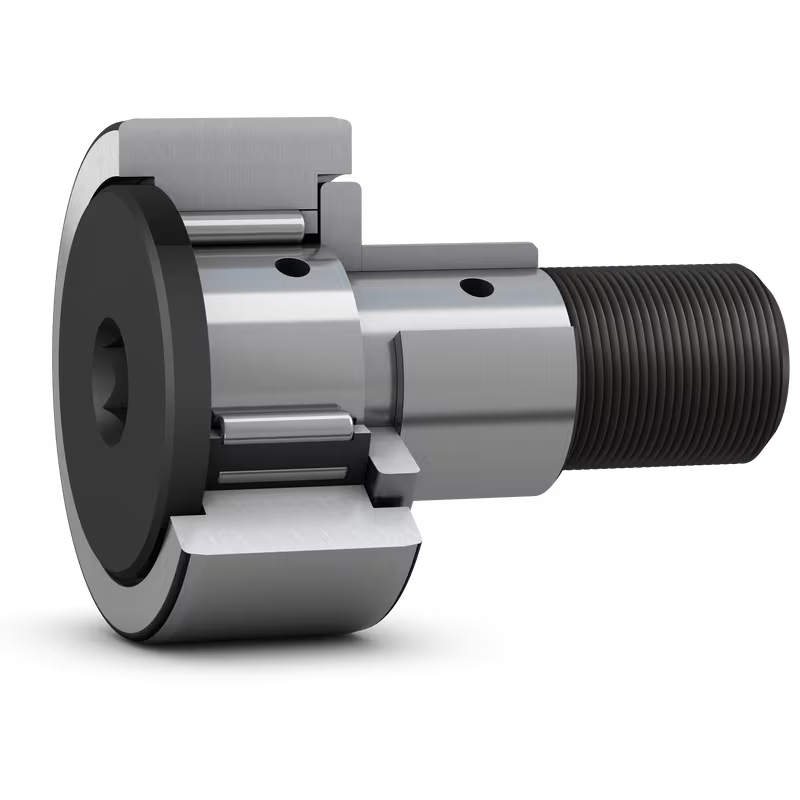
What is a cam roller, and how is it utilized in mechanical systems?
A cam roller, also known as a cam follower or track roller, is a specialized type of roller bearing used in mechanical systems. It is designed to follow the surface profile of a cam or track and transmit motion or force between the cam and a moving component. Here’s a detailed explanation of what a cam roller is and how it is utilized in mechanical systems:
A cam roller consists of a cylindrical roller, needle roller, or ball bearing that is mounted in a stud or yoke. The stud or yoke provides a means of attachment to the moving component of the mechanical system. The roller or bearing element is housed within a thick-walled outer ring, which serves as a guide and support for the roller. The outer ring has a profile that matches the shape of the cam or track over which the cam roller operates.
The primary function of a cam roller is to convert rotary motion into linear motion or vice versa. As the cam or track rotates, the cam roller follows the profile, causing the roller to move along the track. This motion can be utilized in various ways depending on the specific application. Here are some common uses of cam rollers in mechanical systems:
- Motion Transmission: Cam rollers are often used to transmit motion from a rotating cam to a reciprocating or oscillating component. For example, in engines, cam followers are used to transfer the motion of the camshaft to the valves, opening and closing them at the appropriate timing.
- Guiding and Support: Cam rollers can also provide guidance and support to moving components in a mechanical system. They help maintain proper alignment and prevent lateral movement or deflection. This is particularly useful in applications such as conveyor systems, where cam rollers guide the movement of belts or chains.
- Load Bearing: Cam rollers are designed to withstand high loads and provide support to heavy-duty applications. They are often used in machinery and equipment where there is a need for reliable load-bearing capabilities. Examples include construction machinery, material handling equipment, and industrial automation systems.
- Compensating for Misalignment: In some applications, cam rollers are utilized to compensate for misalignment between components. The rolling motion of the cam follower allows it to adjust and accommodate slight deviations in the cam or track profile, ensuring smooth operation even in imperfect conditions.
The choice of cam roller design, size, and material depends on the specific requirements of the application. Factors such as load capacity, speed, operating conditions, and precision requirements are taken into consideration when selecting the appropriate cam roller. Regular maintenance, including lubrication and inspection of the cam roller, is important to ensure its proper functioning and longevity in the mechanical system.
In summary, a cam roller is a specialized type of roller bearing used in mechanical systems to transmit motion, provide guidance and support, bear loads, and compensate for misalignment. Its ability to follow the profile of a cam or track allows for efficient conversion of rotary motion to linear motion or vice versa. Cam rollers find application in a wide range of industries and play a crucial role in ensuring the smooth and reliable operation of mechanical systems.


editor by Dream 2024-05-15