Product Description
High Quality Excavator Undercarriage Parts Roller for E200B Chain Sprocket
| Products information |
| Product name | Excavator/ Bulldozer Sprocket, Excavator Undercarriage Parts |
| Material | 35MnB/40Mn2 |
| Color | Yellow or Black or Customized |
| Technique | Forging/ Casting |
| Finish | Smooth |
| Surface Hardness/Hardness Depth | HRC52-59/8-12mm |
| Packing | standard export packed |
| Port | HangZhou, Xihu (West Lake) Dis. port |
| Time of delivery | Within 15 days after contact and negotiation |
| Payment terms | T/T, L/C, Western Union and so on |
High Quality Excavator Undercarriage Parts Roller for E200B Chain Sprocket
| Related Products |
High Quality Excavator Undercarriage Parts Roller for E200B Chain Sprocket
| Package & Delivery |
1.Package:
Cartons, wooden cases, pallets, etc., according to customer requirements.
2.Delivery type:
A.International Courier, Such as DHL, TNT,UPS or Fedex.
B.By air/By sea/By land.
High Quality Excavator Undercarriage Parts Roller for E200B Chain Sprocket
| About us |
HangZhou CHINAMFG Machinery Co., Ltd. Located in HangZhou city, ZheJiang Province, China. We are a manufacturer
and exporter, specialized in the research, development and production of undercarriage parts for tractor
excavators and bulldozers, all kinds of generator set and engine, refrigeration compressors and spray
polyurea coating materials.
Professional providing in a wide range of construction machine spare parts for crawler excavator,bulldozer,crane:
| 1.Undercarriage Parts | carrier roller, track roller, idler, sprocket, | |||
| adjuster cylinder assy, track shoe, track link, | ||||
| bucket, bucket bushi, bucket teeth, teeth adapter, bolt and nut etc. | ||||
| 2.Engine parts | cylinder block, cylinder head, liner kits, con rod, engine bearing, | |||
| in/ex valve, valve seat, gasket kit, head gaskit, crankshaft, | ||||
| cam shaft,water pump, fuel pump, oil pump, turbocharger, | ||||
| nozzle, oil cooler assy, manifold exhaust etc | ||||
| 3.Seal kits | boom/arm/bucket cylinder seal kit, hydraulic pump seal kit, | |||
| swing motor seal kit,travel motor seal kit, control valve seal kit, | ||||
| adjuster seal kit, center joint seal kit,gear pump seal kit, | ||||
| regulator seal kit, breaker seal kit, bulldozer seal kit etc. | ||||
| 4.Hydraulic parts | hydraulic pump, swing motor assy, travel motor assy, gearbox, | |||
| main control valve, foot valve, operating od assy, pilot pump, | ||||
| regulator, center joint, relief valve, bearing, hydraulic spare parts, gear, etc. | ||||
| 5.Filter | oil filter, fuel filter, hydraulic filter, air filter, oil water seperator etc. | |||
| 6.Gear parts | travel,swing motor:sun gear,shaft,carrier assy,housing,hub,cover. | |||
High Quality Excavator Undercarriage Parts Roller for E200B Chain Sprocket
| FAQ |
1. How can I be sure the part will fit my excavators and bulldozers?
Give us correct model number/machine serial number/ any numbers on the parts itself. Or measure the parts give us dimension or drawing.
2.How about the payment terms?
We usually accept T/T or L/C. other terms also could be negotiated.
3.What is your delivery time?
FOB HangZhou or any Chinese port : 30-40 days . If parts are in stock , our delivery time is only 7-10 days.
4.What are the modes of transportation?
We respect the choice of customers, will also provide advice to customers, the specific mode of transportation can be negotiated.
5.What about Quality Control?
We have a perfect QC system for the perfect products. A team who will detect the product quality and specification piece carefully, monitoring every production process until packing is complete, to ensure product safety into container.
If you are interested in our products, please feel free to contact us to discuss. /* January 22, 2571 19:08:37 */!function(){function s(e,r){var a,o={};try{e&&e.split(“,”).forEach(function(e,t){e&&(a=e.match(/(.*?):(.*)$/))&&1
| After-sales Service: | Online Support |
|---|---|
| Warranty: | 12 Month |
| Type: | Crawler Excavator, Excavator Bucket |
| Application: | Excavator |
| Certification: | CE, ISO9001: 2000, CE, ISO9001: 2000 |
| Condition: | New |
| Customization: |
Available
|
|
|---|
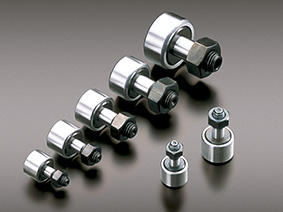
How do cam rollers contribute to the adaptability and versatility of tracking systems in various settings?
Cam rollers play a significant role in enhancing the adaptability and versatility of tracking systems across various settings. Their design and functionality enable them to meet the diverse requirements of different applications. Here’s a detailed explanation of how cam rollers contribute to the adaptability and versatility of tracking systems:
- Multiple Track Configurations: Cam rollers can be utilized in various track configurations, such as linear tracks, curved tracks, or complex multi-axis tracks. This flexibility allows tracking systems to adapt to different motion patterns and trajectories required by different applications. Whether it’s a straight-line motion, circular path, or customized multi-axis motion, cam rollers can be configured to accommodate a wide range of tracking requirements.
- Adjustable Cam Profiles: The design of cam rollers allows for adjustable cam profiles. Cam profiles determine the motion characteristics of the tracking system, including acceleration, deceleration, and dwell periods. By modifying the cam profiles, cam rollers can be customized to suit specific application needs. This adjustability enhances the adaptability of tracking systems, enabling them to handle different speed profiles, motion sequences, or tracking patterns.
- Modular and Scalable Design: Cam rollers are often designed with a modular and scalable approach, allowing for easy integration into different systems and the ability to scale up or down based on application requirements. They can be combined with other components, such as motors, gearboxes, or sensors, to create a complete tracking system. This modular design facilitates the adaptability and versatility of tracking systems, enabling customization and quick reconfiguration as per changing needs.
- Wide Range of Load Capacity: Cam rollers are available in various sizes and configurations, offering a wide range of load capacities. From lightweight applications to heavy-duty industrial settings, cam rollers can handle different loads and forces. This versatility allows tracking systems to adapt to diverse payload requirements, making them suitable for applications ranging from small-scale automation to large-scale material handling.
- Compatibility with Different Environments: Cam rollers are designed to operate in various environmental conditions. They can withstand factors like temperature variations, dust, moisture, and contaminants commonly found in industrial or outdoor settings. This compatibility with different environments enhances the adaptability of tracking systems, enabling their deployment in diverse industries such as manufacturing, logistics, automotive, and aerospace.
- Integration with Control Systems: Cam rollers can be seamlessly integrated with electronic or computer-controlled components, such as sensors, actuators, or programmable logic controllers (PLCs). This integration allows for precise control, synchronization, and automation of tracking systems. By incorporating control systems, cam rollers can adapt to dynamic operating conditions, respond to real-time feedback, and enable advanced tracking functionalities.
- Compatibility with Various Object Shapes and Sizes: Cam rollers are designed to accommodate a wide range of object shapes, sizes, and materials. They can track objects of different geometries, from flat panels to irregularly shaped components. This compatibility with various object characteristics enhances the versatility of tracking systems, enabling them to handle diverse workpieces, products, or materials.
The adaptability and versatility of tracking systems are significantly enhanced by the use of cam rollers. Their ability to work with different track configurations, adjust cam profiles, modular design, load capacity, environmental compatibility, integration with control systems, and compatibility with various object shapes and sizes makes them a valuable component in a wide range of applications, providing adaptability, flexibility, and versatility to tracking systems in diverse settings.
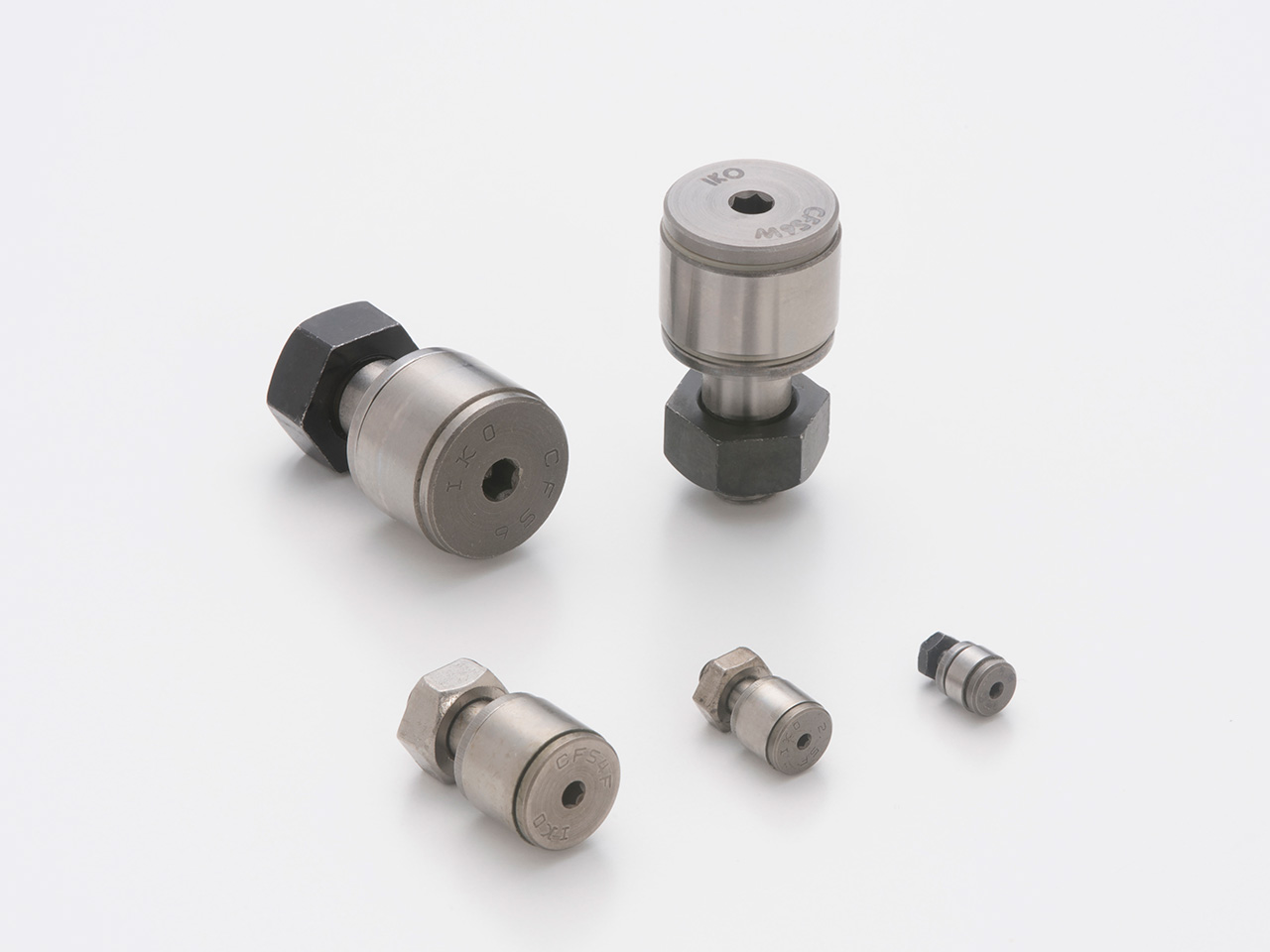
Can you provide examples of products or machinery that commonly use cam rollers?
Cam rollers are widely used in various products and machinery across different industries. Their unique design and functionalities make them suitable for applications that require precise motion, controlled tracking, and efficient operation. Here are some examples of products or machinery that commonly utilize cam rollers:
- Printing Machinery: Cam rollers are commonly found in printing machinery, such as offset printers, flexographic printers, and digital printers. They are used to precisely guide the movement of paper or printing substrates through the printing process, ensuring accurate registration and consistent print quality.
- Material Handling Systems: Cam rollers are extensively used in material handling systems, including conveyor systems, packaging equipment, and automated storage and retrieval systems (ASRS). They help in guiding and tracking the movement of items, pallets, or containers, ensuring smooth and controlled transportation within the system.
- Industrial Robots: Cam rollers play a vital role in industrial robots, particularly in robotic arms and manipulators. They facilitate precise and controlled motion, allowing the robot to perform accurate positioning, pick-and-place operations, and assembly tasks with high repeatability and reliability.
- Textile Machinery: Cam rollers are commonly utilized in textile machinery, such as weaving looms, knitting machines, and spinning machines. They assist in guiding the movement of yarns, threads, or fabrics, ensuring proper tension and alignment during the manufacturing process.
- Automotive Manufacturing: Cam rollers are employed in various stages of automotive manufacturing, including assembly lines, paint booths, and body-in-white operations. They contribute to the smooth and precise movement of car bodies, parts, or components, enabling efficient production processes.
- Packaging Machinery: Cam rollers are commonly integrated into packaging machinery, such as form-fill-seal machines, cartoners, and labeling machines. They assist in guiding the packaging materials, ensuring accurate positioning, and controlled movement during the packaging process.
- Food Processing Equipment: Cam rollers find applications in food processing equipment, including filling machines, sorting systems, and packaging lines. They aid in the smooth and precise movement of food products, containers, or packaging materials, maintaining the integrity and quality of the processed food items.
- Medical Devices: Cam rollers are utilized in medical devices and equipment, such as diagnostic machines, laboratory automation systems, and surgical robots. They contribute to the precise movement and positioning required for accurate diagnostic results, sample handling, or surgical procedures.
These examples represent just a few of the many products and machinery where cam rollers are commonly used. Their versatility, precision, and reliability make them suitable for a wide range of applications in industries like printing, material handling, robotics, textiles, automotive manufacturing, packaging, food processing, and medical devices.
In summary, cam rollers are widely employed in various products and machinery across different industries. Their usage in printing machinery, material handling systems, industrial robots, textile machinery, automotive manufacturing, packaging machinery, food processing equipment, and medical devices demonstrates their significance in achieving precise motion, controlled tracking, and efficient operation in diverse applications.
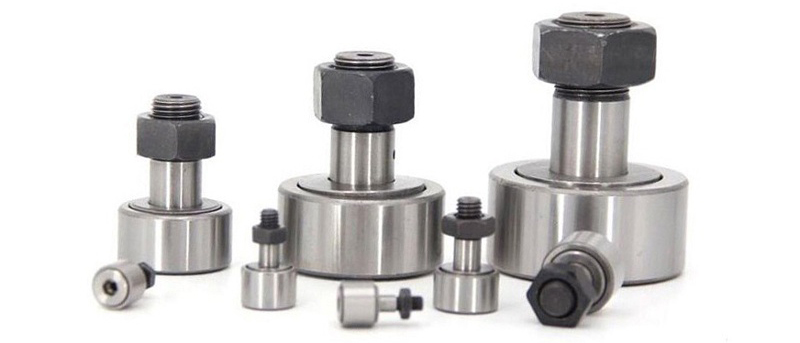
Can you explain the primary functions and roles of cam rollers in various applications?
Cam rollers, also known as cam followers or track rollers, serve a variety of functions and play crucial roles in various applications across different industries. These specialized roller bearings are designed to follow the surface profile of a cam or track, enabling them to transmit motion, provide guidance, support, and handle loads. Here’s a detailed explanation of the primary functions and roles of cam rollers in various applications:
- Motion Transmission: One of the primary functions of cam rollers is to transmit motion from a rotating cam to a reciprocating or oscillating component. They are commonly used in applications such as engines, where they transfer the motion of the camshaft to the valves, controlling the opening and closing of the valves at the appropriate timing. Cam rollers ensure precise and reliable motion transmission in these systems.
- Guidance and Support: Cam rollers are frequently utilized to provide guidance and support to moving components in mechanical systems. They help maintain proper alignment and prevent lateral movement or deflection. In conveyor systems, for example, cam rollers guide the movement of belts or chains, ensuring smooth and controlled operation.
- Load Bearing: Cam rollers are designed to bear high loads and provide support in heavy-duty applications. They are commonly found in machinery and equipment where there is a need for reliable load-bearing capabilities. Construction machinery, material handling equipment, and industrial automation systems often rely on cam rollers to handle substantial loads and ensure stable and efficient operation.
- Compensating for Misalignment: In some applications, cam rollers are employed to compensate for misalignment between components. The rolling motion of the cam follower allows it to adjust and accommodate slight deviations in the cam or track profile. This feature ensures smooth operation even when there are minor misalignments, improving the overall performance and reliability of the system.
- Application-Specific Functions: Cam rollers can also serve application-specific functions based on the requirements of a particular system. For example, in printing and packaging machinery, cam rollers may be used to control the tension and guide the movement of printing substrates or packaging materials. In textile machinery, cam rollers may play a role in controlling the feeding and positioning of fabrics. The versatility of cam rollers allows them to be tailored to the specific needs of diverse applications.
The choice of cam roller design, size, and material depends on the specific demands of the application. Factors such as load capacity, speed, operating conditions, precision requirements, and environmental factors are taken into consideration when selecting the appropriate cam roller. Regular maintenance, including lubrication and inspection, is vital to ensure optimal performance and longevity of cam rollers in various applications.
In summary, cam rollers fulfill essential functions and play significant roles in a wide range of applications. They enable motion transmission, provide guidance and support, bear heavy loads, compensate for misalignment, and serve application-specific functions. Cam rollers contribute to the efficiency, reliability, and smooth operation of mechanical systems across diverse industries.


editor by Dream 2024-04-26